
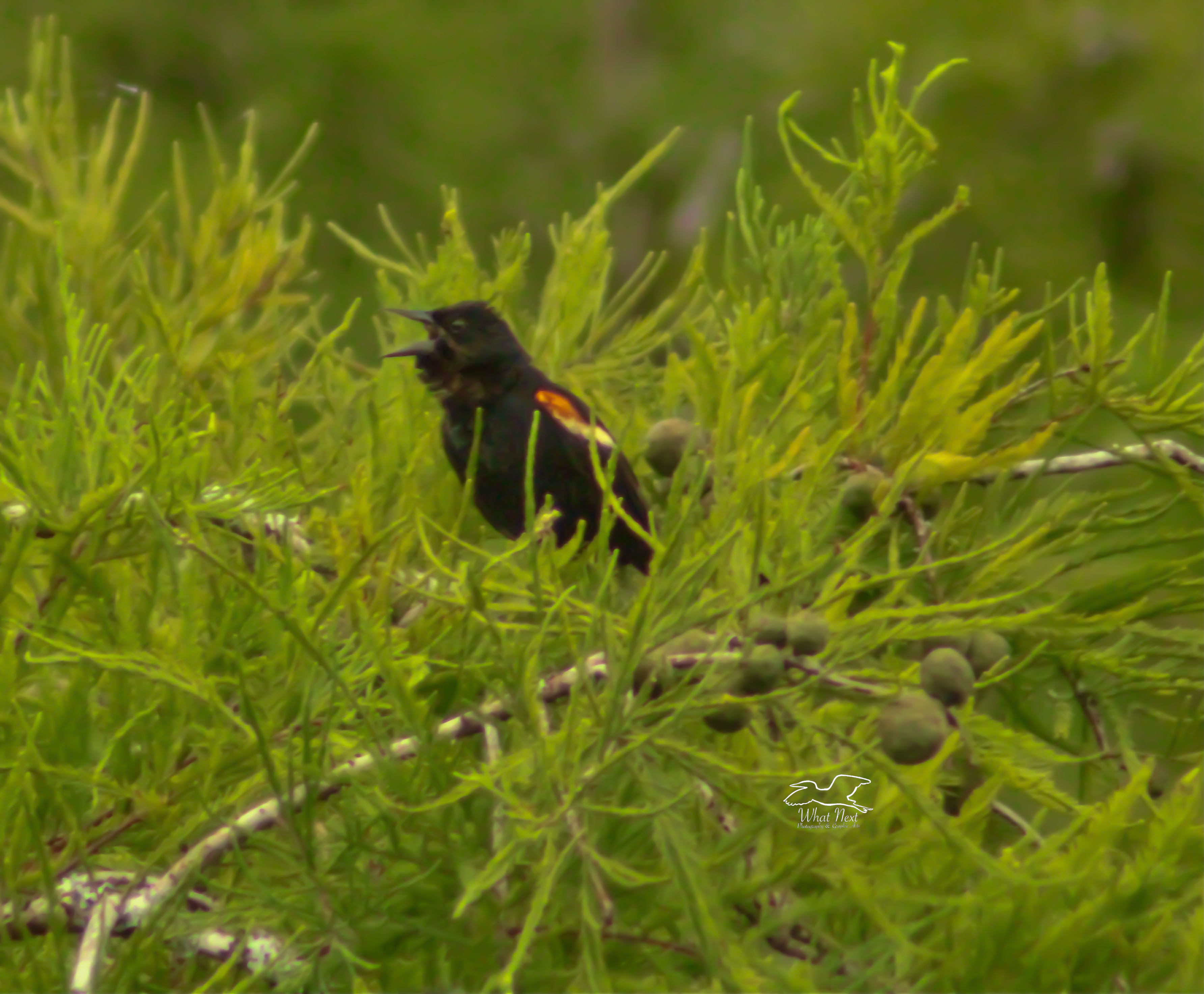
The Red Winged Blackbird is a Beautiful North American Resident
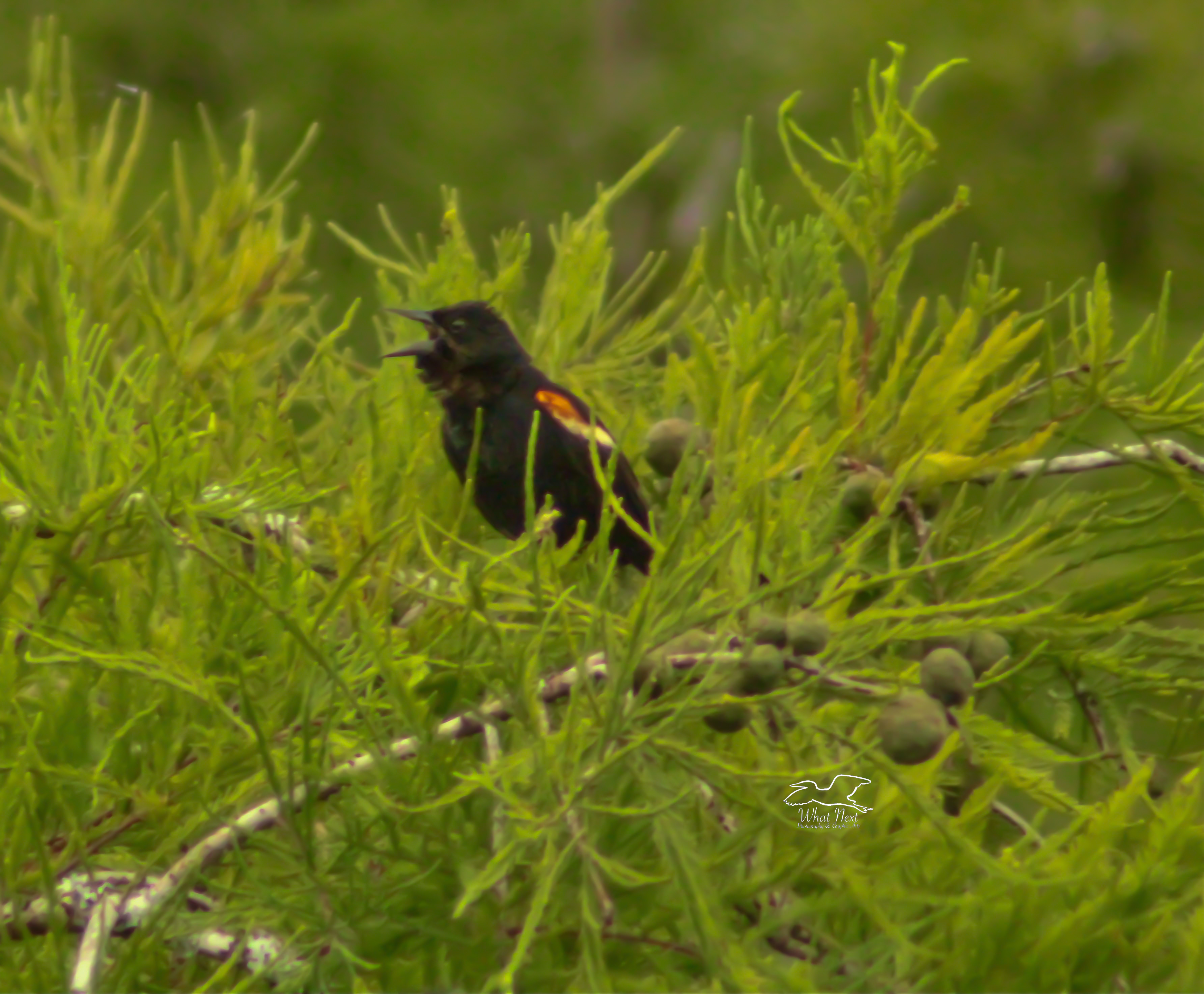
Ever since I’ve been going out to the egret rookery, I’ve been noticing some smaller, black birds flying around is the marshy grass flats nearby. At first I thought they were crows, but quickly realized they were too small. Then I thought perhaps they were boat tailed grackles, but the tails didn’t seem long enough. Most of the time they were too far away to be able to accurately identify, so I didn’t pay them much attention. Last week I noticed that several females were in the range of my telephoto lens, so I took a look. They looked like female red winged blackbirds (Agelaius phoeniceus) and I became very excited. I have always loved photos and drawings I’ve seen of these birds, but I’ve never actually seen one before that day, even though they’re one of the most common birds in North America. I scouted the area looking for a male to confirm my identification and before long he showed up, perched in a fairly nearby cypress tree and began singing to mark his territory. If the sight of those brightly colored wing patches wasn’t enough to make the ID, that song definitely was. So at last, I have fulfilled one of my lifelong birding dreams; to see and photograph a red winged blackbird!

As I stated earlier, red winged blackbirds are a common, if not the most common bird in North America. They can be found in all fifty states in the United States, in most of southern Canada, and down into Mexico. Most of them are year long residents, but some of the northernmost populations will migrate south for the coldest part of winter. Their favorite habitats are moist areas with plenty of cypress trees, marsh grasses, and cattails. When they can’t get that type of habitat, they will live almost anywhere else that provides trees and grasses. This flexibility is almost certainly part of the reason they have been so successful. They are also very flexible in their dietary choices. They are omnivores and eat a lot of grasses and grass seeds, but when available, they will also eat fruit, berries, seeds from feeders, and small nuts. They will also actively hunt insects and consume insects on the grasses that they eat. They have even been known to eat small reptiles, frogs, small mammals, eggs, trash, and occasionally carrion.

During the nonbreeding season these birds are gregarious and can be sometimes seen in very large flocks. During breeding season, however, the males are extremely territorial. Males are polygamous and will mate with numerous females, who will then nest in that male’s territory. Females do all of the work of building the nest, incubating the eggs, and raising the young, while the males protect them and their nests from predators. The nests are usually built in the cattails overhanging water, when they are available. In other habitats they are build on or near the ground in the grasses. They usually produce one clutch per year, even in southern climates. These birds here in central Florida are in the midst of their breeding season and while I was watching them I saw quite a few territorial behaviors on the part of the males, while the females were for the most part hunting for food. I was lucky enough to catch the female in the photo above on a short break from her motherly duties, while the dominant male nearby was busy chasing away any other male that attempted to enter the swamp.


Recent Comments