
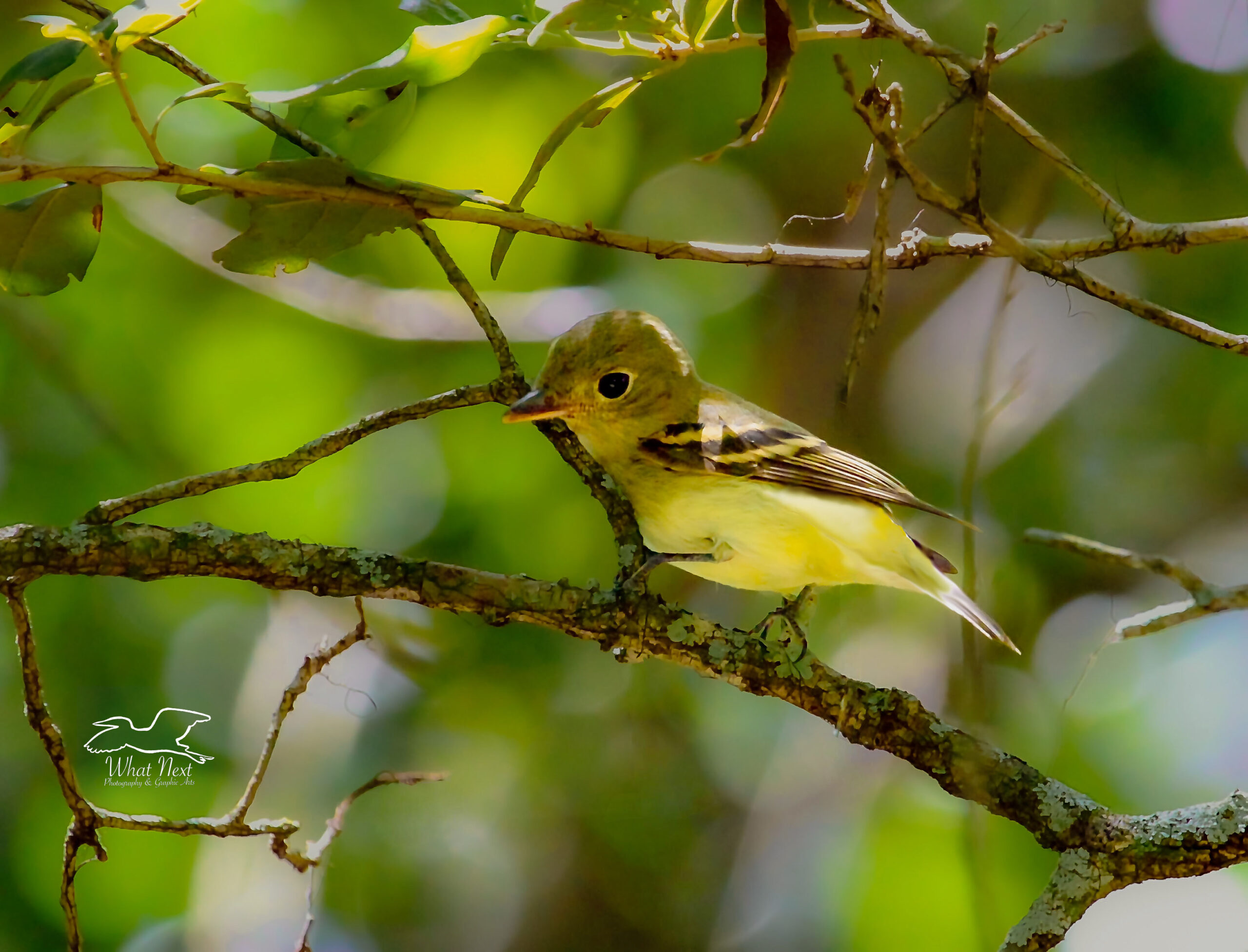
Acadian Flycatchers are Beautiful Little Insectivores

According to the calendar today is the first day of meteorological fall, although the autumn equinox is not until September 22. Regardless of your definition of fall, some of the early fall avian migrants are beginning to move. I have already seen a couple of ovenbirds in the woods on my property. Most of my male hummingbirds have left and the females and immature birds will be leaving soon. Another bird that is getting ready to fly south is the Acadian flycatcher (Empidonax virescens). This is a bird that I don’t usually see on my property because it prefers a wetter habitat than I have here. But as they get ready to migrate they will venture into drier areas to hunt for insects to help fatten up for the flight. Every fall I see one or two hunting here, but have never been able to get any decent photos before. We have plenty of insects here as well as mealworms being made available every day. The poke berries are also ripening, and the beautyberries won’t be far behind. Even though these flycatchers eat mostly insects, they will also sometimes partake of berries and even some seeds, so with all these resources, it’s not surprising that a couple of these guys will drop by.

The Acadian flycatchers look very similar to their cousins, the great crested flycatchers that live and breed on my property. The Acadian flycatchers are noticeably smaller though and have shorter tails with less brown on them. The Acadians also have a thin white eye ring that the great crested flycatchers don’t. Acadian flycatchers breed throughout most of the eastern United States and north into southern Ontario Canada. They prefer mature forests, especially near rivers, creeks, or lakes. They tend to stay hidden in the forest and don’t venture towards the edges often. They feed on flying insects that they will grab in mid air or on caterpillars and other larvae that they glean from tree branches or underneath leaves. They build their nests in the fork of a horizontal tree branch. The nests are build from grasses and small twigs held together with spider silk and cocoon silk.

These birds winter in Central America into northern South American and some of the Caribbean islands. They still like mature forests, but are less particular about nearby water. Acadian flycatchers also prefer large blocks of forest in both their summer and winter homes. Therefore, one of the biggest threats to them is forest fragmentation. Fortunately, their populations have been fairly stable since the 1960s and they are currently considered a species of least concern.


Recent Comments