The Cuban Brown Anole Has Become Widespread in Florida

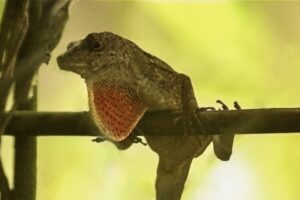
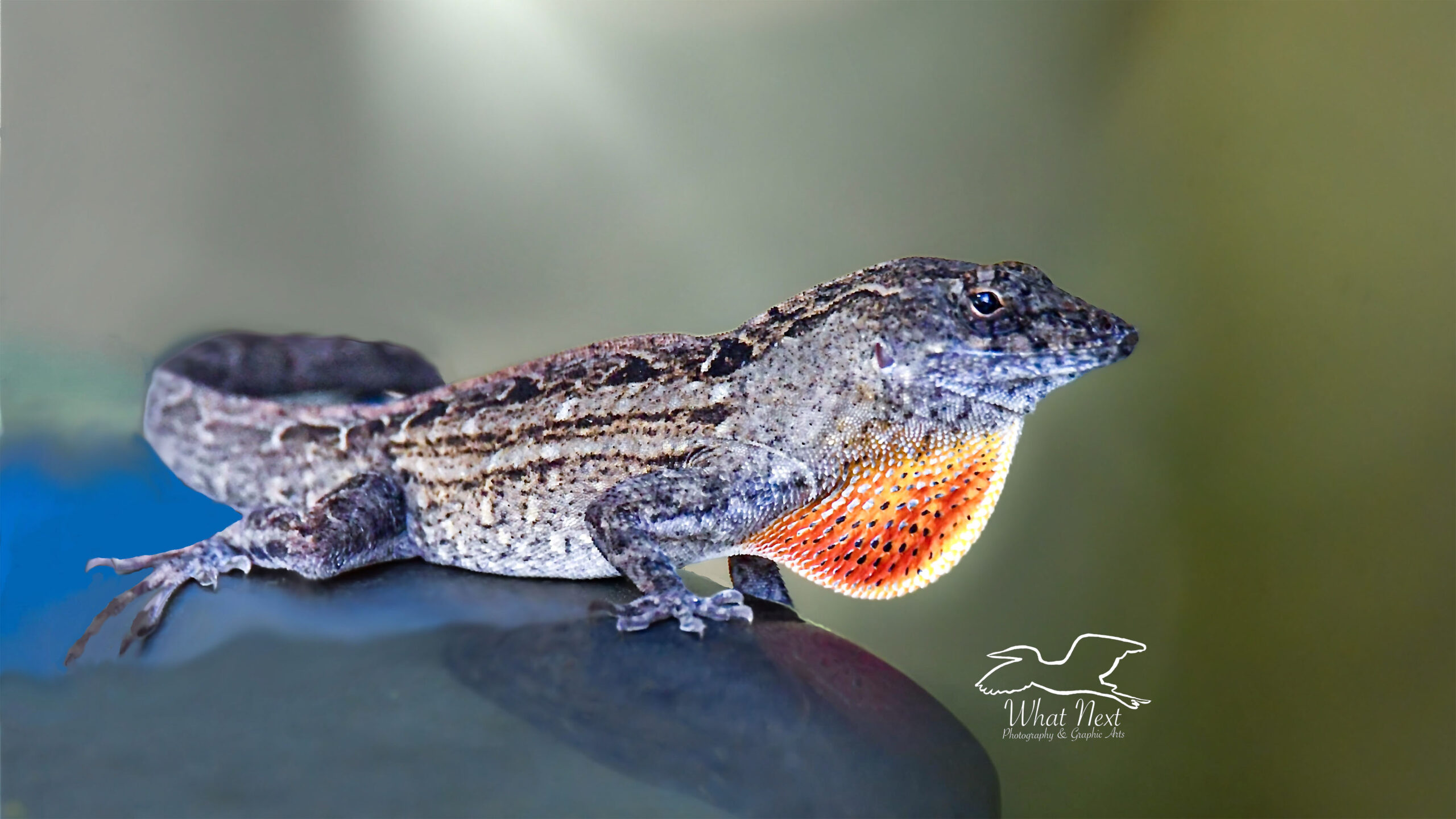
The Cuban brown anole (Anolis sagrei) was introduced into the United States in the 1800s and over time has spread throughout Florida and some other parts of the Deep South. This little lizard is considered invasive and competes with the native green anole for habitat. Fortunately, the green anoles have adapted to the presence of brown anoles by becoming a more arboreal species and have survived well. Green anoles have the ability to change color from a bright green to brown or sometimes almost black depending on their surroundings, the temperature, and their mood. Brown anoles are not as blessed, and always remain a brownish color, although they have a limited ability to lighten or darken in color. Male brown anoles have a bright orange dewlap which they extend and contract during times of stress and as a mating display. They have a brownish crest that runs along their backs as well. The crest can stand up when another male anole comes along as part of a territorial display. I have both green anoles and brown anoles on my property. This fellow was sunning himself on top of a table on my porch. He was very comfortable and really didn’t want to move, even when I walked by. He did extend his dewlap a few times, but didn’t move at all even while I went inside and grabbed my camera. After shooting a few shots of him, I left him alone to continue his basking. There are people who say that whenever you see a brown anole, you should kill it since it’s invasive, but I don’t kill wildlife here. What’s more, since this species has been in Florida for many, many years, I seriously doubt that killing one lizard will make much difference in population control.