
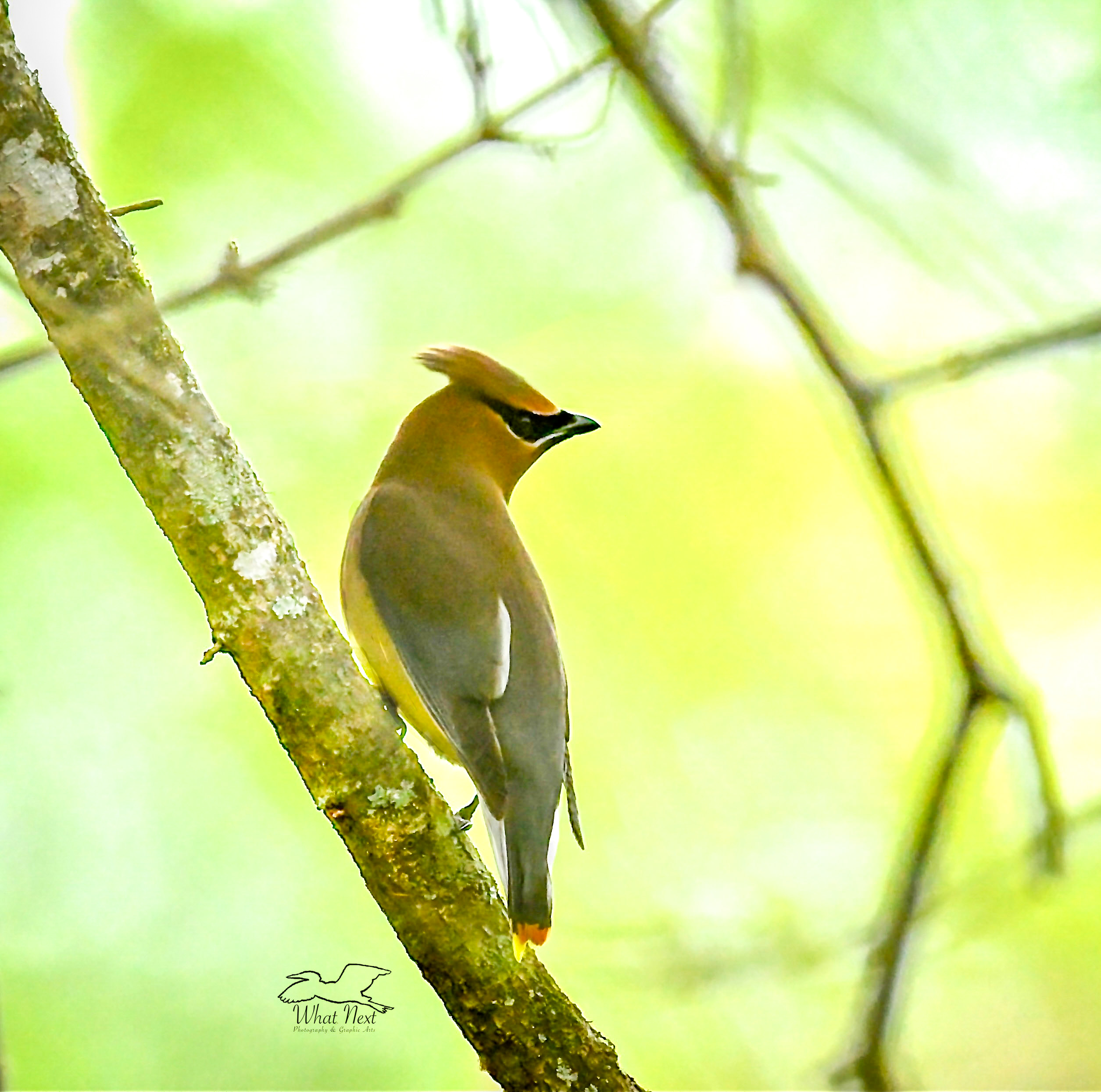
Cedar Waxwings are a Beautiful Migratory Species

A short time ago I had a wonderful few days of watching a flock of cedar waxwings (Bombycilla cedrorum) in my yard. Cedar waxwings are one of those birds I’ve always wanted to see, but never had the opportunity until last year. Last year I had a single bird that was here only for a day. It spent all its time very high up in one of the live oak trees and I couldn’t get any decent photos, but I was very stoked to get to see it. This year, though, it was a small flock and they were very active feeding on the oak tassels. They also stayed for five days this time, so there were more chances to see them. Needless to say, all of those mornings I was excited to get out of bed and get outside to see if they were still around.

Cedar waxwings are small to medium sized songbirds that breed in the northern United States and southern Canada. They winter in the southern United States and well into Central America. Although all the maps have them being in central Florida all winter, I have only ever seen them during spring migration. That may be because my property is too dry. Waxwings tend to prefer wood edges with tall trees and a nearby water source. They can also be found at field edges, in orchards, and in urban parks.

Cedar waxwings are well known for being the only birds that can subsist entirely on fruit, if necessary. Unlike most frugivores, instead of regurgitating indigestible seeds, waxwings pass them out in the stools, making them extremely important for seed distribution. Even though they can survive on fruit alone, they prefer to also eat some higher protein foods such as insects and pollenating flowers, especially during the breeding season. One of these waxwings favorite foods are the cones of the eastern red cedar, which is how they derived their common name. They are highly social, even during the breeding season, and individuals will often share food and other resources. Despite the fact that I don’t see them here very much, they are a common North American bird and are considered a species of least concern. In fact, their populations are growing thanks in part to the fact that many people, even in urban areas, are planting fruiting trees in yards and parks.


Recent Comments