
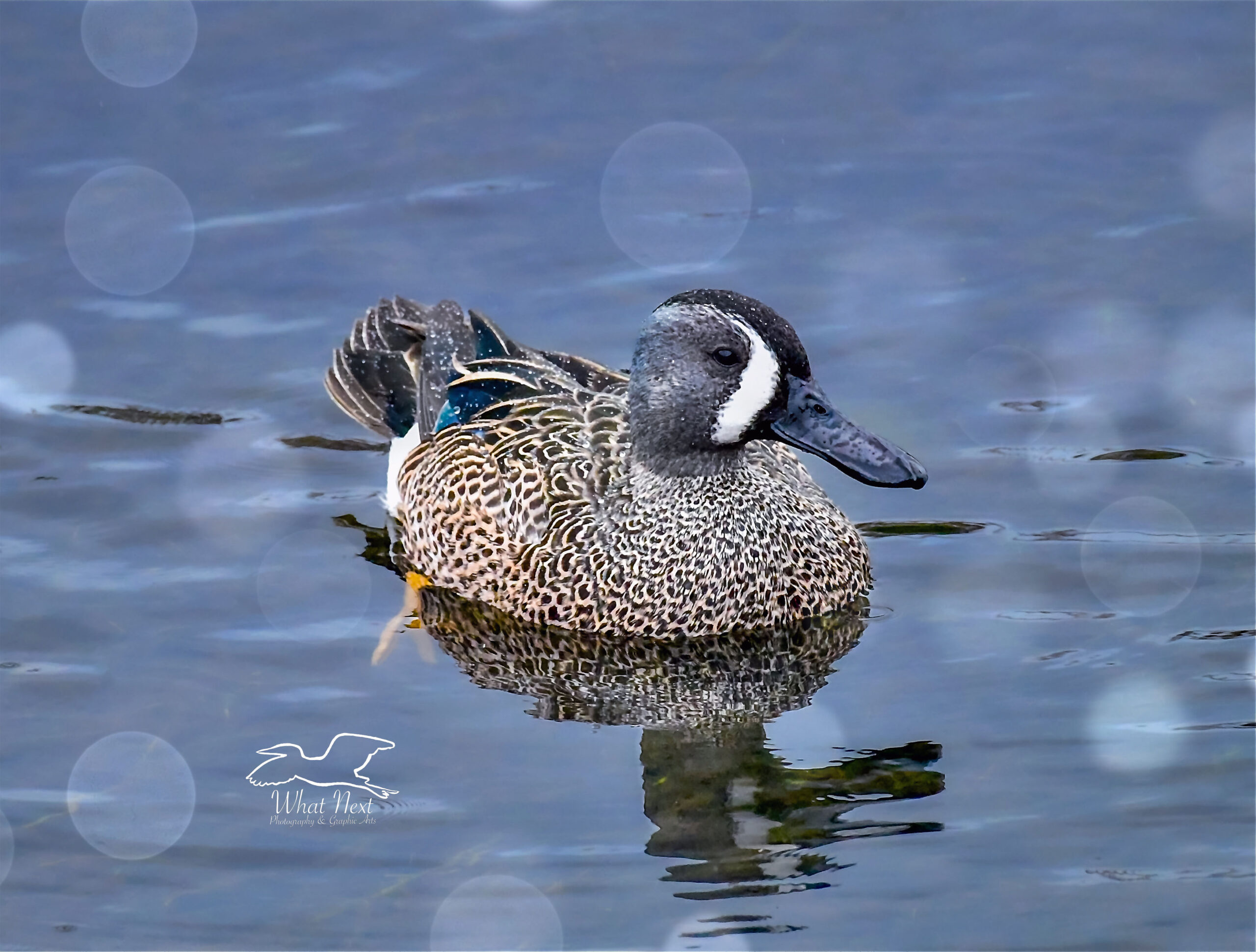
Blue Winged Teal Can be Colorful and Interesting

I fell in love with ducks when I was much younger and worked at a wildlife park. The park was on a river, and we got quite a few species of ducks. One of the ducks that we saw a lot of were the blue winged teal (Spatula discors). Since leaving the park, I haven’t seen many blue winged teal, so I was really pleased to see a small group of them at Sweetwater Wetland Preserve. As you can see, the male is a very handsome fellow with an unmistakable white crescent in front of its eyes. Like most ducks, the female is much less brightly colored and is instead mostly mottled brown. Some females may have a light colored crescent, but most don’t. Both do have light blue wing patches, but those are mainly visible during flight.

Blue winged teal migrate to Florida and further south earlier than many of the other migratory ducks. They are also usually one of the last to leave in the spring, so we have them around for a good bit of the year. Their preferred habitat is marshes and swamps, but they can also be found on slow flowing streams and rivers as well as some lakes. They nest in the northern United States and much of Canada as well as eastern Alaska. After breeding, males leave the females to incubate and raise the young while they go through a molt that leaves them flightless for several weeks. After regaining flight they begin their journey south. Females and immatures follow later after the young have developed flight. Blue winged teal are dabbling ducks, which means that they duck (pun intended) under the surface of the water to feed on plant stems, seeds, and sometimes aquatic invertebrates.

Blue winged teal are a species of least concern and seem to have a fairly stable population. Population numbers do tend to rise and fall depending on the health and water levels in their breeding wetlands, but they seem very capable of regenerating population losses due to bad years. They are protected by the Migratory Bird Act, which has helped to maintain their populations, and they are the second most common duck in North America, second only to the mallard.


Recent Comments