
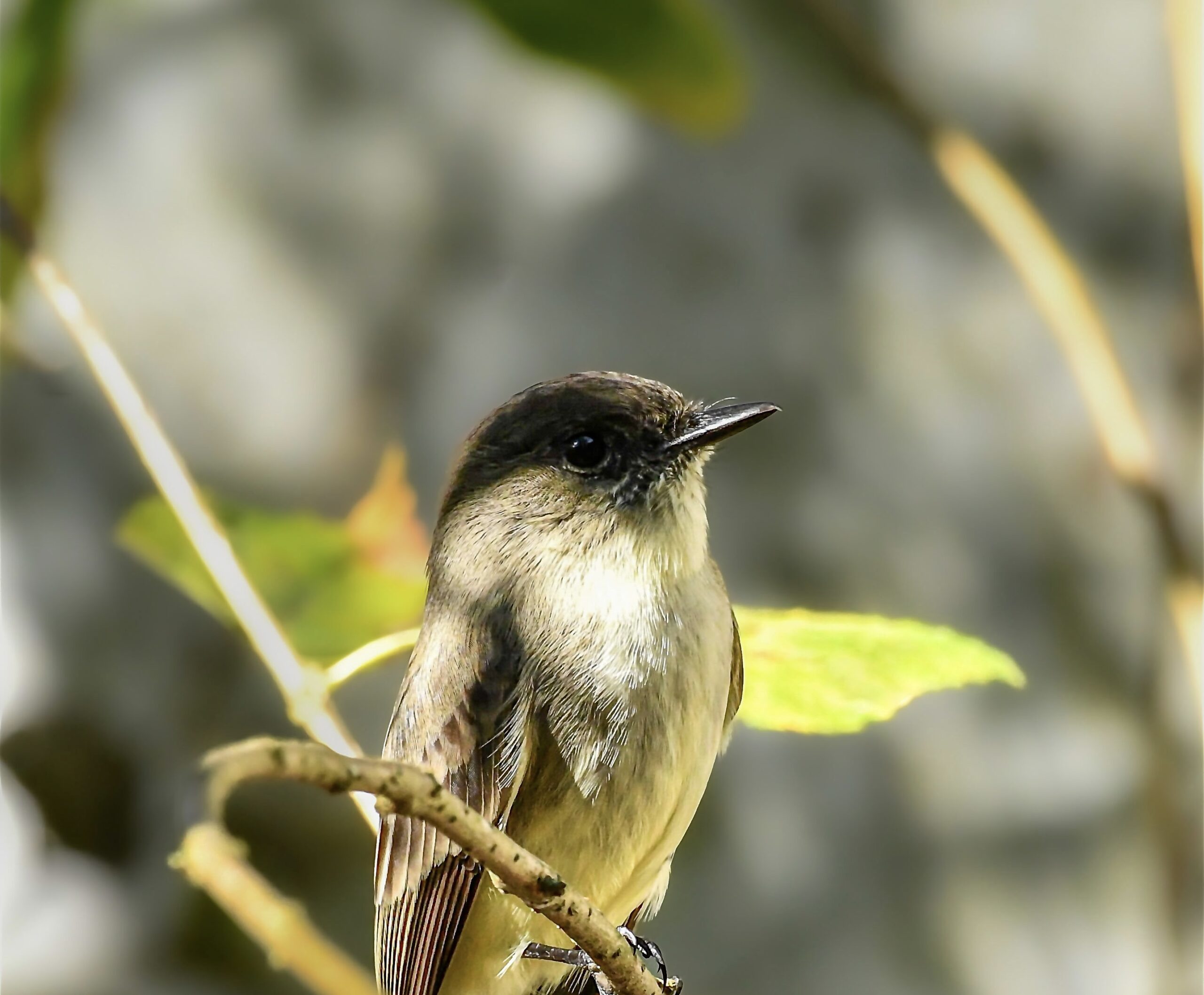
The Eastern Phoebe is Another Interesting Winter Bird

During the spring and summer the woods around my house are occupied by great crested flycatchers. In the early fall, they head further south for the winter and are replaced by Acadian flycatchers and eastern phoebes (Sayornis phoebe). The phoebes are much more common than the Acadian flycatchers, and neither are nearly as colorful as the great crested flycatchers. The phoebes are very interesting little birds though. They tend to be calm and watchful, but not overly shy. They usually show up by themselves and find a good perch where they can watch the air for flying insects and also watch the goings on around them, especially when other birds are in the area.

As well as eating insects these little songbirds will also eat spiders, ticks, millipedes, fruits, and berries. They are yet another bird that has a liking for beautyberries and will sometimes eat pokeberries, too. When here for the winter, these little birds are usually found at the edges of forests and fields that are surrounded by brush. There is often water nearby, but that is not an absolute requirement. As well as Florida, phoebes can be found in most of the southeastern United States and eastern Mexico during the fall and winter. For the breeding season they go further north into the northeastern United States and Canada.

This is one of several phoebes that have decided to take up winter residence here. I don’t see them every day, but I do see them often enough that I think they will probably stick around. This one was perched in the brush near one of my feeding stations. It was definitely keeping an eye out for insects to hunt, but it also seemed intrigued by the comings and goings of the cardinals and chickadees. It stayed there calmly watching for several minutes before deciding to fly off into the woods. It seemed to have very little concern about me, although I made no attempt to approach it. We just both hung out, watching the birds together.



Recent Comments