
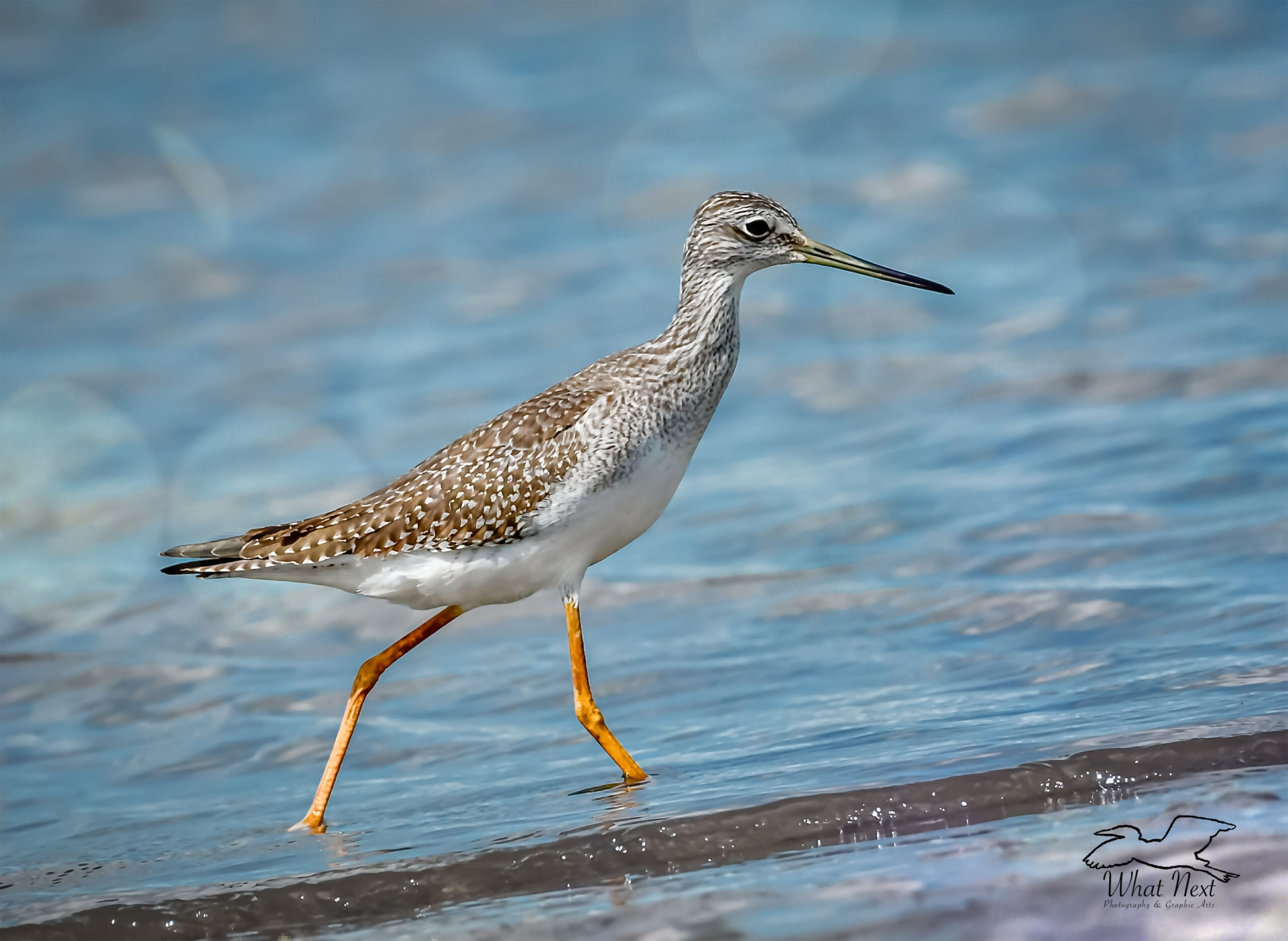
The Greater Yellow Legs have a Very Interesting Lifestyle

The last time I went out to Fort Island Gulf Beach I was really hoping to see some winter migrant shore birds. Any boy, I was not disappointed! There were several species that were new to me, including this greater yellow legs (Tringa melanoleuca). I’m not really great at identifying these shore birds, especially the migrants, since I don’t get to spend a lot of time with them, which was part of the reason for this trip.

One of the easiest to recognize characteristics of the greater yellow legs, besides its bright yellow legs, is its distinctive high stepping gait. Despite the sometimes awkward looking gait, they can be surprisingly fast, and often run after prey. They tend to wade in the shallows of almost any body of water whether it is salt water, fresh water, or brackish water. They eat mostly aquatic insects, but they will also take small fish and even small amphibians if they can catch them.

During the winter, these birds can be found across the southern United States, in Mexico, the the Caribbean, Central America, and throughout South America. In the summer breeding season, they make their homes in the bogs of the boreal forests across middle Canada and Southern Alaska. Their nests are located on the ground, often at the base of a tree. They’re usually a simple scratch in the dirt lined with lichens. Males and females share in the incubation of the eggs and raising of the young. Migration is done during the day with males heading out first and females and young following 3-4 weeks later.



Recent Comments