
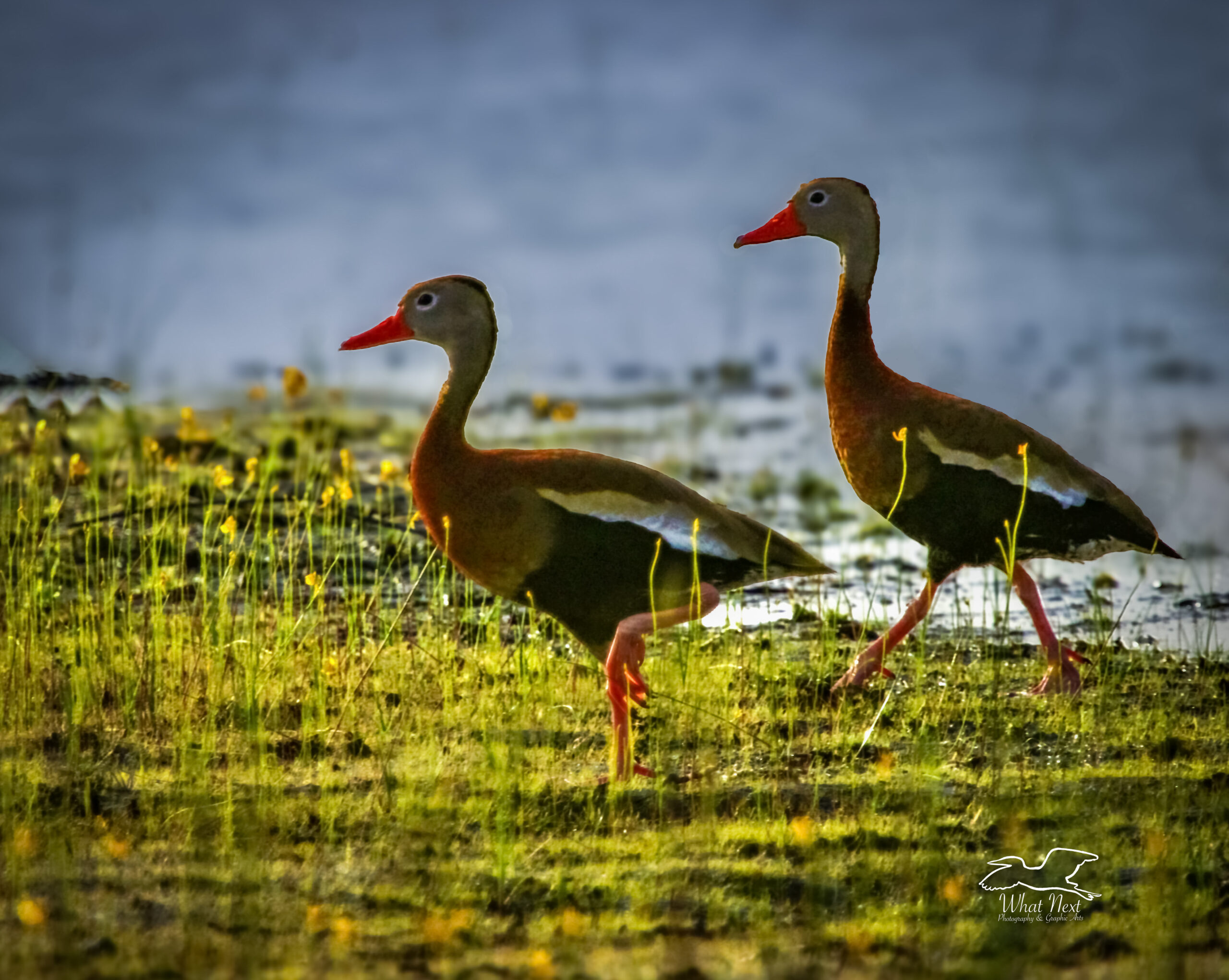
Black Bellied Whistling Ducks are Very Interesting

On a recent trip out to Watermelon Pond the water levels were very low and that allowed me to go further than I ever had before. With the water so low many of the usual birds weren’t around, but instead, I ran across a new species that I had never encountered before. That species was the black bellied whistling ducks (Dendrocygna autumnalis). There was actually a small group of them dabbling in the shallow water on the far side of the pond from where I started. The area surrounding the pond is mostly marsh with reeds and grasses, but has very little cover where you can hide from the wildlife, so I approached very slowly, shooting images the entire time. I was actually very surprised at how close they let me get until I researched them to write this blog and discovered that most of the time, they’re pretty friendly towards people.

Black bellied whistling ducks are larger and longer legged than most ducks, so in some respects they more closely resemble geese. Like wood ducks, which they are related to, these ducks prefer to nest in hollow trees. They will also very readily use nest boxes. If hollow trees or nest boxes aren’t available, they will also use a scrape in the ground, preferably under some heavy brush or low hanging branches. Pair are monogamous and both parents are involved in raising the young. Pairs usually stick together for many years if not for life. Whistling ducks eat mainly plants, grasses, and seeds, but when available they also eat aquatic insects, snails and other mollusks, spiders, moths, grasshoppers, and other insects. Their propensity for eating seeds has sometimes lead them to become nuisances in crop fields.

Black bellied whistling ducks are one of the few wildlife species that is actually growing in numbers and expanding its range. They are currently found in the southern United States, Mexico, Central America, and South America. However, they have been spotted in all the states in the eastern US and even in southern Canada as vagrants. They are mildly migratory as they search for food and nesting spots, and some of the northern most populations will migrate further south during winter. This is, apparently enough migration to given them protection under the Migratory Bird Act. It’s always interesting to get to see a new species, and I always have fun hiking around Watermelon Pond, so even though a lot of the usual birds were missing, it was a well worthwhile trip that I look forward to doing again. If I’m lucky, maybe the whistling ducks will still be around.


Recent Comments