
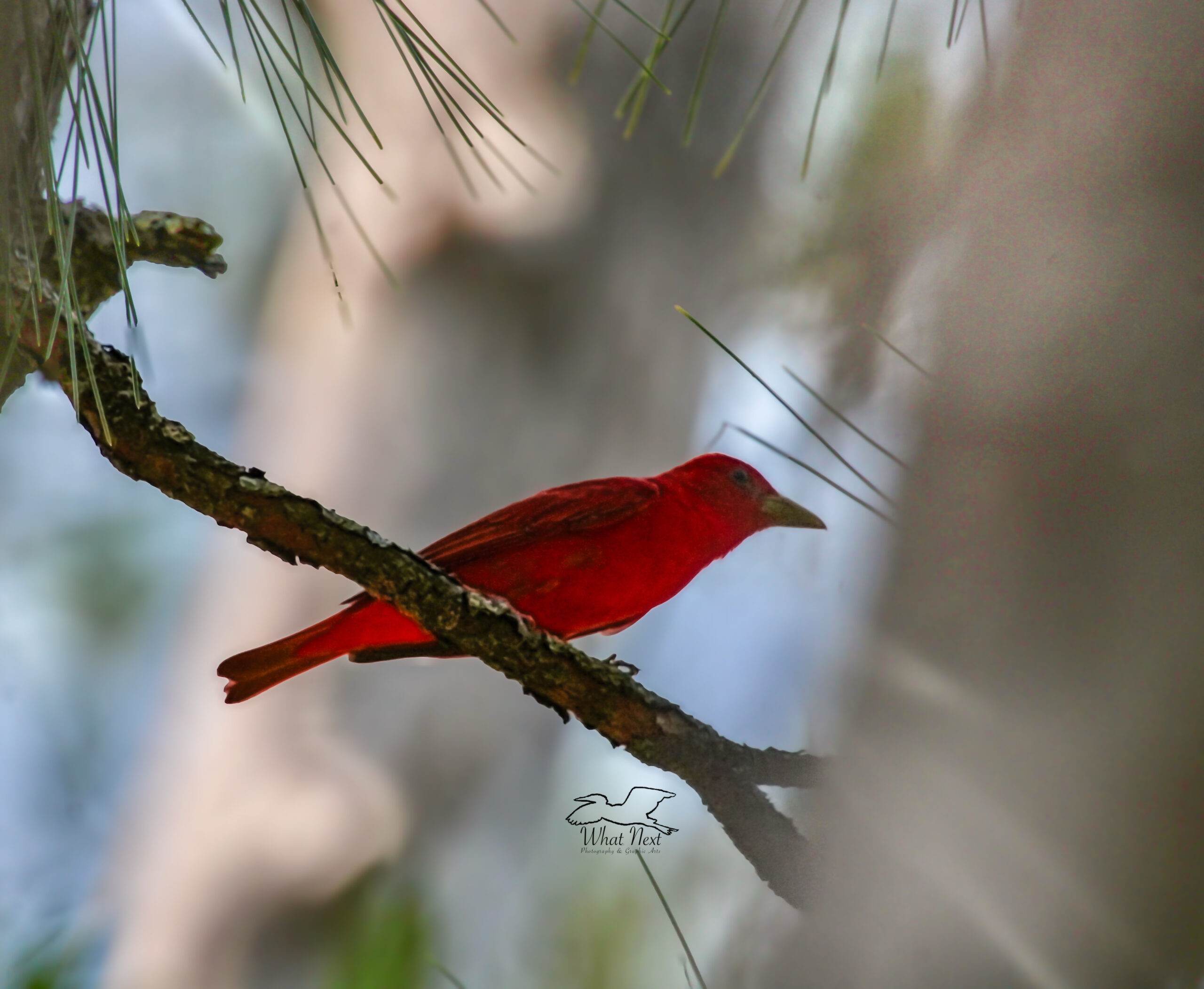
The Summer Tanager is a Beautiful and Brilliant Summer Bird

The highlight of my hike yesterday on a new trail in the Gothe State Forest was seeing a pair of summer tanagers (Piranga rubra). Overall, it wasn’t a great birding trip, but it was good for insects, butterflies, and flowers. The tanagers were up in the pine forest near the tree tops, and I heard them long before I saw one. Although the female, who is a greenish yellow, was the first one I saw, I never did get any decent photos of her. She was always up too high or partially hidden behind some leaves. I found a comfortable spot on the forest floor and just watched them for a while, hoping that they would get used to me and come a little closer. The male finally did, and I was able to get these three shots of him mostly in the open.

Summer tanagers are in the same family as cardinals, buntings, and grosbeaks. They used to be classified with the true tanagers, but have been found to be closer to the cardinals. Summer tanagers are only in the United States during the summer months for breeding purposes. While here they can be found in most of the south from Florida to eastern California. They can also be found in northern Mexico. They winter in the warmer temperatures of southern Mexico, Central America, northern South America, and Cuba. They tend to live in pine or mixed pine and oak forests in this area and in riparian habitats in the southwest.

Summer tanagers eat mainly insects, especially bees and wasps, which they have developed a technique for eating without getting stung. Many of these insects they will catch in mid air. They will also eat grubs, fruits, and berries. They are especially fond of sweet things and prefer overly ripe fruits. Occasionally they will also come to feeders for jelly and nectar. They nest in the tree branches and both parents feed and care for the young. Migration back to their winter homes usually begins in late summer to early fall. I am always excited when I can see and identify a new species. That’s especially true when they are only in this area for a period of time. I wish I had had better luck in photographing the female, but I was really happy to at least get to see her. Maybe I’ll get some pictures of her on my next visit.


Recent Comments