Yellow Bellied Sapsuckers are Interesting Winter Visitors

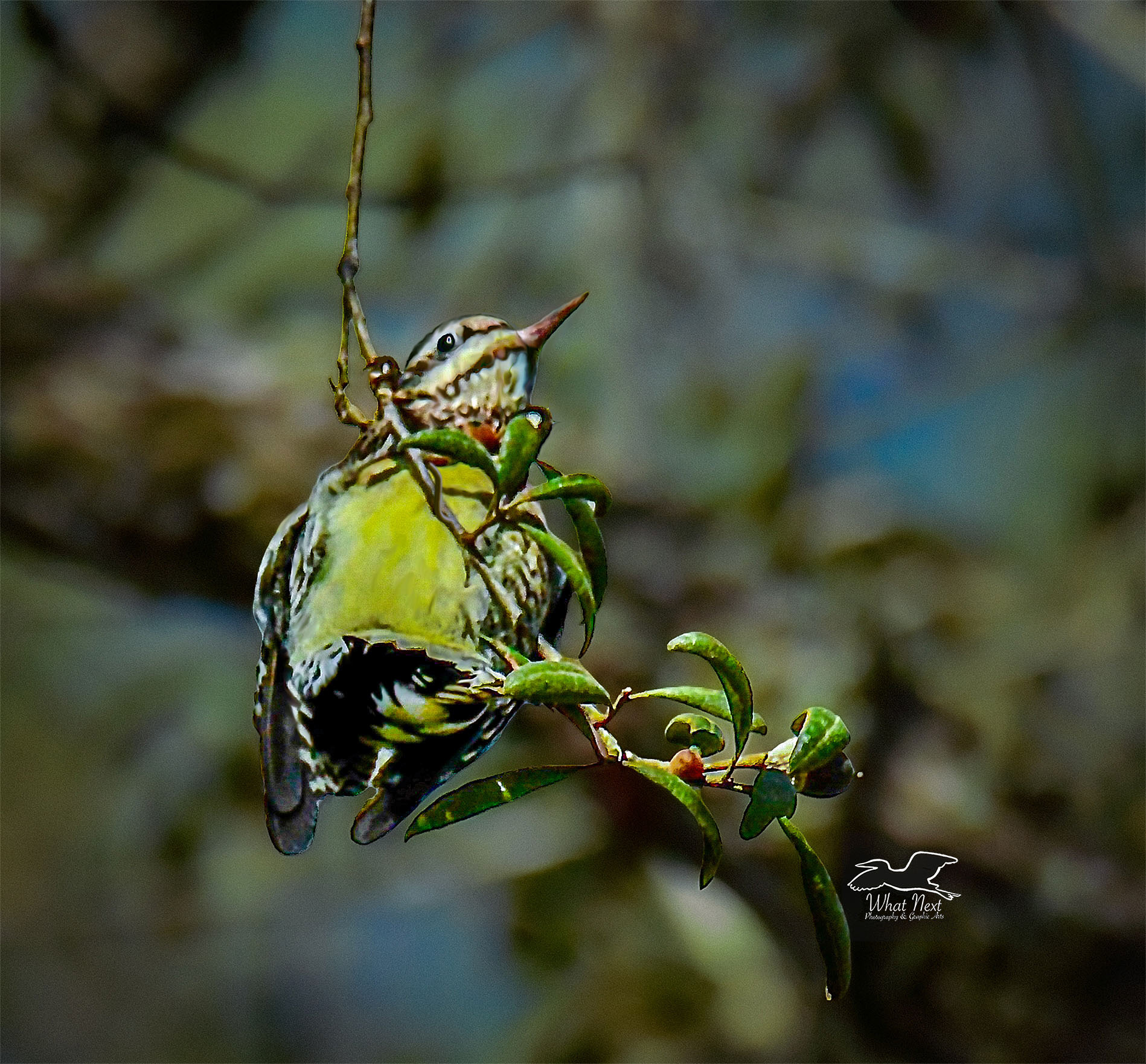
Every fall/winter our regular woodpecker population is joined by a winter migrant, the yellow bellied sapsucker (Sphyrapicus varius). Unlike other woodpeckers, sapsuckers eat mainly tree sap and the insects that are attracted by the sap. The yellow bellied sapsuckers look fairly similar to our year round downy woodpeckers, but they do have a different pattern on their wings (specifically, a long patch of white on each wing), and males have a red neck. As their name suggests, they also have a yellow belly wash, but it is often difficult to see unless they hang upside down like this one was incredibly kind to do. These birds breed in much of Canada and a bit of the northern United States. The pair are monogamous and quite territorial. The male does most of the early excavation for the nest, but both birds finish it, sit on the eggs, and feed the young. Young are fed mostly insects, sometimes dipped in sap. The breeding season usually lasts from April to July.
In September to October yellow bellied sapsuckers begin the journey south to the southeastern United States, Central America, and the Caribbean Islands. Each year there are a couple that come through here. I usually see them in the oak trees where they will eat insects, drill for sap and eat tree cambium and bast. They never stay here for more than a few days so the damage they cause is minimal, but these birds are often considered pests since their feeding behaviors can be quite damaging to trees. Their population is slowly declining, mainly due to habitat loss. They are, however, still consider a species of least concern and they still have a large population over a large range.