
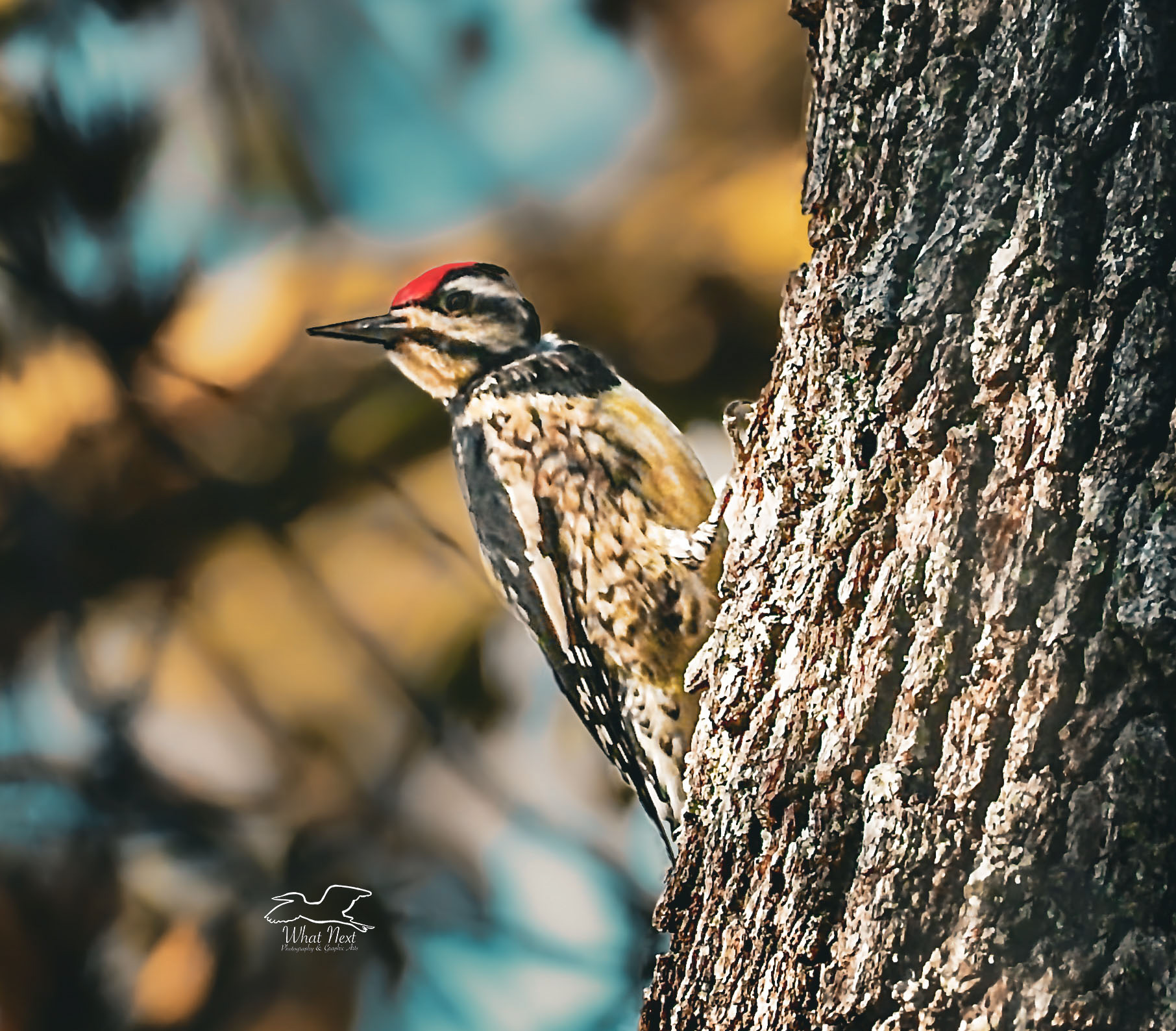
The Yellow Bellied Sapsucker is an Interesting Winter Woodpecker

Last week there was one day that was really great for woodpeckers. On that morning I managed to see red bellied woodpeckers, downy woodpeckers, a pileated woodpecker, and two yellow bellied sapsuckers (Sphyrapicus varius), a species that I hadn’t seen before. It was quite the woodpecker morning. Needless to say I was really pleased to see the supsuckers both because they were new for me, but also because they’re only here in our area during the winter months. I have not seen them since, so I suspect this was just a stop over on their way further south, which also makes the sighting special to me. These birds live most of the time and breed across Canada into Alaska and in the northeastern United States. They winter in the eastern US, Central America, and in the West Indies.

Sapsuckers look a lot like other woodpeckers, but they have some habits that are different from most others. One of their principle foods is tree sap and they will also eat tree fibers. When they drill for sap, they drill a number of trial holes in a circle around the trunk, usually somewhere near the intersection with a branch. If they find sap they will drill further holes, all neatly arranged in columns. The arrangement helps to keep the maximum amount of tree sap flowing and available. Of course, they also will consume insects and sometimes berries like the other woodpeckers. During the breeding season their diet consists mainly of insects, and insects dipped in sap are fed to the chicks.

In the breeding season yellow bellied sapsuckers are usually found in deciduous and mixed deciduous forests. In the winter they tend to prefer more open areas and forest edges. Sometimes they are even seen in single trees in a pasture or in urban areas. Like other woodpeckers, they nest in hollows in trees. Both sexes work on the nest, but males usually do most of the excavation of a suitable cavity. If a good nest is found, it may be reused for multiple years. Both the male and female incubate the eggs and feed the young once they have hatched. The young grow rapidly and usually fledge at 10 to 13 days of age. Yellow bellied sapsuckers are a species of least concern due to their large range and a large population, but like many other species, their population has been declining.
I am hopeful that there will be more sapsuckers that come through here this winter. I’d be especially pleased if one or two decided to stay for the winter. But if that doesn’t happen, I’m at least pleased to have gotten to see them.


Recent Comments