
Ruby Throated Hummingbirds are Really Spectacular Fliers

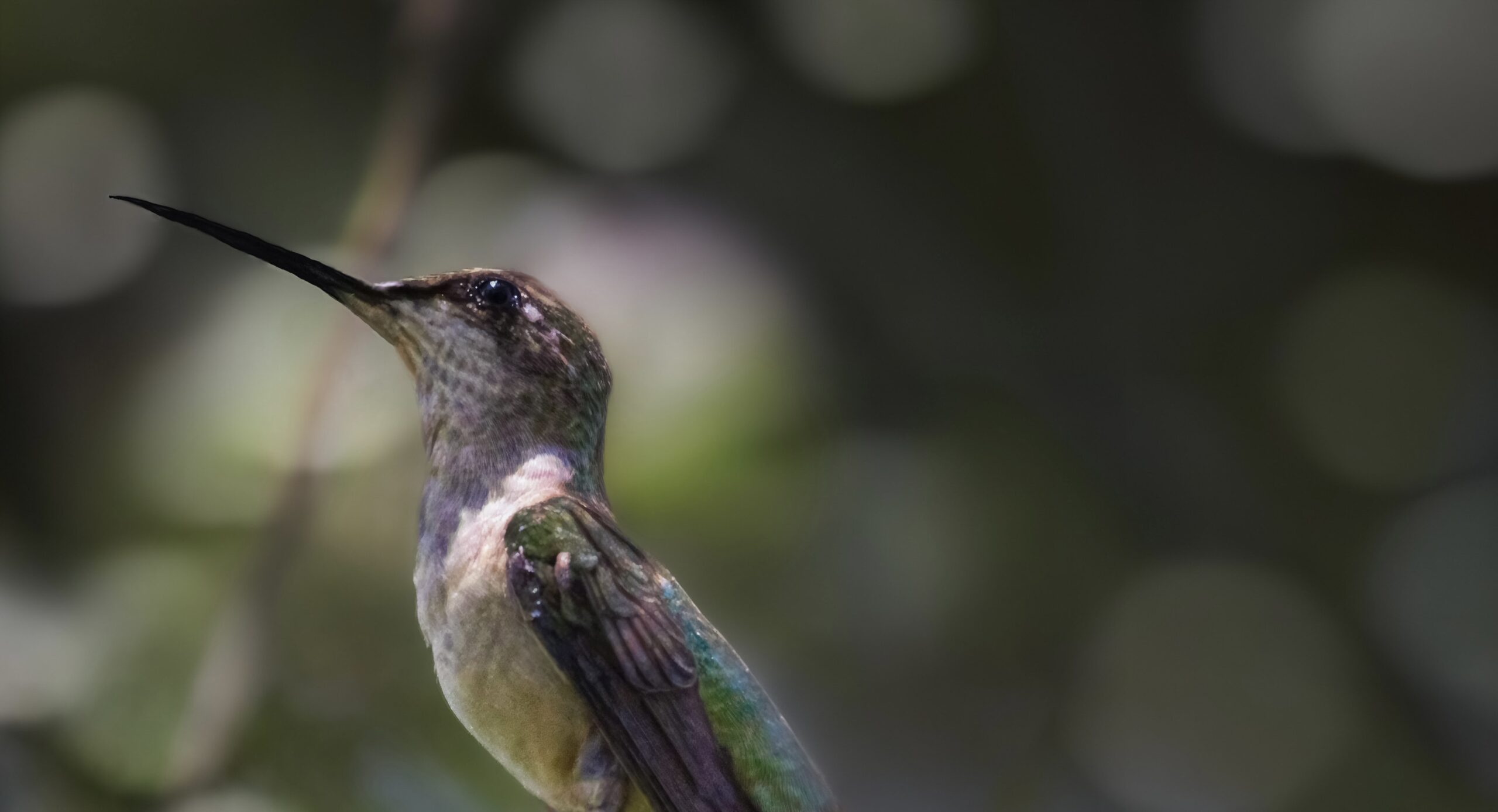
Last summer I put out a hummingbird feeder on my front porch and saw not a single hummingbird. This summer I didn’t bother until about two months ago when a single little hummingbird came buzzing around my back porch while I was outside watching the songbirds. That afternoon I got out the feeder, gave it a thorough cleaning and made up some nectar. Since then, I’ve seen the bird back again quite a few times, but never had much luck getting any photos. But I’m not one to give up easily (or remove a food source that is getting used), and yesterday I finally got a few shots of this pretty little female ruby throated hummingbird (Archilochus colubris). She flew in for some nectar and wasn’t sure about my presence so she briefly perched in a nearby tree. Although I’m still hoping to get a shot or two of her in flight, I was quite excited to get these after weeks of trying.

Ruby throated hummingbirds are the only species of hummingbirds that we get around here this time of year, so even before I got any images, I knew what I had. Males and females look quite a bit different with males having the namesake red throat patch. The males usually show up earlier in the spring to establish territories. Females frequent the most desirable territories and breed with those males. Beyond breeding, no bond is established, and females do all the nest building, incubation of eggs, and feeding of the young. Nests are small pouches made of petal scales, grasses, and plant fibers held together with spider web and are hidden in the brush attached to a branch. They usually have one, sometimes two broods per year.

These hummingbirds are highly migratory doing their breeding in the eastern United States and southeastern Canada, especially Ontario. After the breeding season they head south and winter in very southern Florida, Mexico, Central America, the Carribean, and northern South America. They prefer deciduous forests or mixed deciduous and evergreen forests. They typically live on the forest edges and feed on flower nectar, small flying insects, and spiders. Their incredible flight capabilities allow them to move forward, backward, up, and down as well as being able to stop or change direction almost instantly and to hover. These abilities help them to both avoid predators and to feed themselves. They tend to favor red or yellow (especially red) tubular flowers that they often feed on by hovering in front of them and using their long beaks and tongues to extract nectar. They capture most of their insect prey on the wing, although they will also pluck insects or the spiders themselves out of spider webs. They can also make long, uninterrupted flights during migration. Therefore, as you can see, flight and especially their exceptional flight functions, are extremely important to these little gems.


Recent Comments